A - Ako je neko lud, ne budi mu drug.
Ako hoćeš koga da poznaš, podaj mu vlast.
B - Bez alata nema zanata.
Bolje umeti, nego imati.
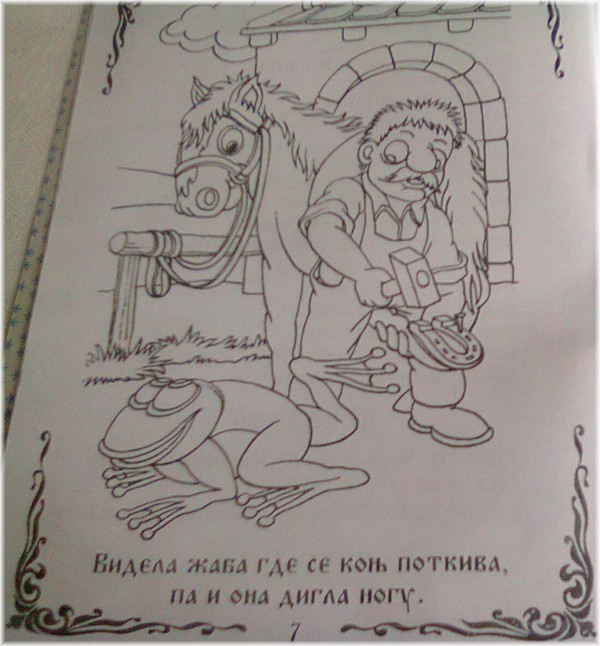
V - Videla žaba gde se konj potkiva, pa i ona digla nogu.
 Veselo je srce golemo blago.
G - Gladnog ne teši, već nahrani.
Gde je stida, tu je i poštenja.
D - Delo čoveka hvali.
Dogovor kuću gradi.
Đ - Đe (gde) je obraz tu je i duša.
Đe će kruška no pod krušku.
Q-A:
Pitao sin oca, kad je po svetu hteo poći:
- Od šta mi se valja najviše čuvati ?
- Od tuđe muke.
Tongue Twisters: (audio)
Pitala metla metlu, gde je metla metlu; Metla metla metlu iza vrata.
Čokančićem ćeš me, čokančićem ću te!
Cvrči, cvrči cvrčak, trči, trči trčak; trči, trči trk! Trčak trkom trči, crni cvrčak cvrči!
Part 2
From A to Đ: wisdom arranged like an alphabet
The sayings from A to Đ are miniature arguments, not decorative quotations. Bez alata nema zanata links skill with the tools needed to practise it; Dogovor kuću gradi makes cooperation the builder of a stable home. Their rhythm and contrast help oral transmission.
Some lines preserve older vocabulary or syntax. Đe is an ijekavian form of gde, while obraz can mean honour or moral reputation, not only the physical face. Keep the original wording intact and interpret it inside the values and circumstances it evokes.
Read the image behind the advice
Videla žaba gde se konj potkiva does not really concern a frog learning blacksmithing. It warns against copying an action without understanding whether it suits your abilities or circumstances. Bolje umeti, nego imati places practical knowledge above possession: what you can do may outlast what you own.
The father’s answer—čuvati se tuđe muke—deserves a pause. It can warn against causing suffering, exploiting it or becoming entangled in another person’s misfortune without wisdom. Discussing several interpretations is better advanced practice than hunting for one rigid English equivalent.
Let the tongue twisters train precision
| Latinica | Ћирилица | English |
|---|---|---|
| Bez vežbe nema sigurnog izgovora. | Без вежбе нема сигурног изговора. | There is no confident pronunciation without practice. |
| Dobar dogovor čuva i prijateljstvo i kuću. | Добар договор чува и пријатељство и кућу. | A good agreement protects both friendship and home. |
| Gladnom čoveku prvo ponudi hleb, pa savet. | Гладном човеку прво понуди хлеб, па савет. | Offer a hungry person bread first, then advice. |
| Tuđa nevolja nije prilika za ličnu korist. | Туђа невоља није прилика за личну корист. | Someone else’s hardship is not an opportunity for personal gain. |
| Čavka čeka čamac kraj čađavog čardaka. | Чавка чека чамац крај чађавог чардака. | A jackdaw waits for a boat beside a sooty wooden house. |
Choose a proverb for five human situations
Take one proverb and give it a modern scene: a group project, borrowed tool or difficult friendship. For the tongue twisters, speak in three rounds—accurate and slow, accurate and natural, then quick without swallowing č, ć, c or tr.
- Finish: Bez alata nema ______.
- What does đe mean in standard ekavian Serbian?
- Choose a proverb about cooperation.
- Write obraz in Cyrillic.
- Say the new tongue twister three times.
What Vuk’s pages whisper back
- zanata
- gde
- Dogovor kuću gradi.
- образ
- Čavka čeka čamac kraj čađavog čardaka.
Choose the saying you disagree with most; defending your objection in Serbian is excellent advanced speaking practice.
Marina Petrović