Practise Serbian listening with Sanja Vučić’s interview, then use her biography and Eurovision experience as prompts for complete answers.
Learning Serbian by Singing with Sanja Vučić
This is the perfect moment for you to meet our gorgeous Sanja Vučić and practise Serbian while listening to this interview,and doing a listening comprehension exercise based on her story:
- Odakle je Sanja?
- Koliko ima godina?
- Kada je snimljen ovaj intervju?
- Gde Sanja sada živi?
- Šta je želela da studira?
- Gde je njena mama sada?
- Od kada Sanja prati Evroviziju?
- Kako se zvala njena osnovna škola?
- Da li je Sanja bila bolji đak u osnovnoj ili srednjoj školi?
- Ko Sanju podržava?
- Koju vrstu muzike Sanjini roditelji vole?
- Kako je Sanja opisala svoju majku?
- Da li Sanja ima dečka trenutno?
- Gde je sve Sanja pevala?
- Da li Sanja sada želi da bude operska pevačica?
- Kada je Sanja bila jako srećna?
- Koje trenutke Sanja uvek zaboravlja?
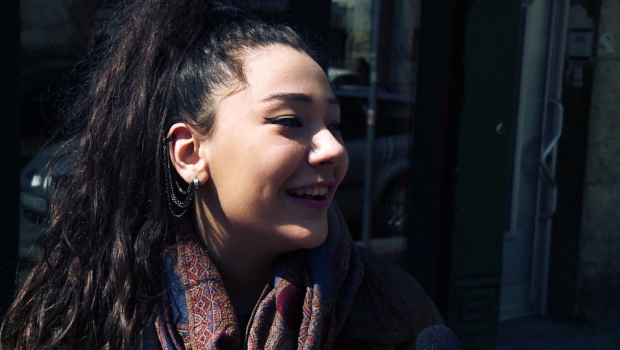
p.s. don't forget to vote for her tonight!
Following an interview in natural Serbian
Before listening, read the questions and predict the vocabulary you may hear. During the first viewing, answer only questions about place, age and time. On the second viewing, focus on education, family and music. Finally, retell the story in chronological order. This layered approach makes a fast authentic interview manageable without simplifying the original speech.
An interview is unscripted speech, which means false starts, fillers and speed. Do not aim to catch every word. Listen first for the shape of the answer — is she talking about childhood, about school, about music? — and only then go back for detail. The sentences here give you the vocabulary to follow that shape.
Interview sentences in Latin and Cyrillic
| Latin script | Cyrillic script | English |
|---|---|---|
| Sanja je odrasla u Srbiji. | Сања је одрасла у Србији. | Sanja grew up in Serbia. |
| Odmalena je volela muziku. | Одмалена је волела музику. | She loved music from an early age. |
| U intervjuu govori o školi i pevanju. | У интервјуу говори о школи и певању. | In the interview she talks about school and singing. |
| Pažljivo slušam njene odgovore. | Пажљиво слушам њене одговоре. | I listen carefully to her answers. |
| Posle videa prepričavam njenu priču. | После видеа препричавам њену причу. | After the video I retell her story. |
Notice the past tense forms: odrasla je, volela je. In spoken Serbian the auxiliary often moves or shortens, and reading the written version in both scripts fixes the full form in your mind so you can recognise the shortened one when you hear it.
Listening in layers
Play the interview once with no text at all and write down three things you understood. Play it again while reading, and correct yourself. Play it a third time with the text covered. Three passes over the same short clip teach far more than one pass over three different clips.
Interview exercise
Translate these sentences into Serbian in Latin and Cyrillic, then write three sentences about your own childhood in the same past tense.
- Sanja grew up in Serbia.
- She loved music from an early age.
- In the interview she talks about school and singing.
- I listen carefully to her answers.
- After the video I retell her story.
Answers
- Sanja je odrasla u Srbiji.
Сања је одрасла у Србији. - Odmalena je volela muziku.
Одмалена је волела музику. - U intervjuu govori o školi i pevanju.
У интервјуу говори о школи и певању. - Pažljivo slušam njene odgovore.
Пажљиво слушам њене одговоре. - Posle videa prepričavam njenu priču.
После видеа препричавам њену причу.