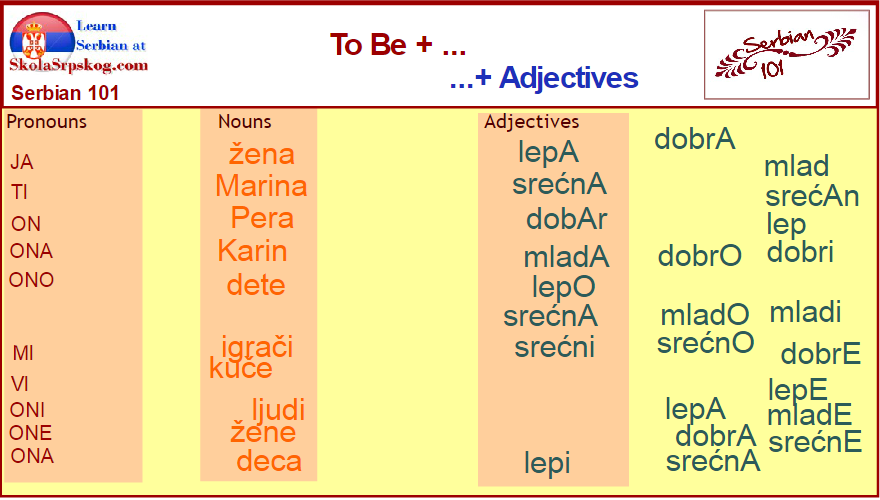
The easiest way to learn has always been through playing games. That's why I am sharing a very simple game about the verb to be in Serbian:

Why the verb biti is worth a game
Serbian has two present-tense forms of to be and they do different jobs. The short forms — sam, si, je, smo, ste, su — are unstressed, cannot begin a sentence and normally sit in second position: Ja sam učenik, or simply Učenik sam. The long forms — jesam, jesi, jeste, jesmo, jeste, jesu — are stressed, and you need them for a short affirmative answer and for emphasis: Da li si umoran? — Jesam.
The negative is a third set again, written as one word: nisam, nisi, nije, nismo, niste, nisu. This is why a game beats a table here — the forms are few, but choosing between them has to become instant, and instant only comes from repetition you enjoy.
The verb biti in three shapes
| Latinica | Ћирилица | English |
|---|---|---|
| Ja sam iz Novog Sada. | Ја сам из Новог Сада. | I am from Novi Sad. |
| Da li si spreman? — Jesam. | Да ли си спреман? — Јесам. | Are you ready? — I am. |
| Ona nije kod kuće. | Она није код куће. | She is not at home. |
| Mi smo zajedno u razredu. | Ми смо заједно у разреду. | We are in the same class. |
| Oni su umorni posle puta. | Они су уморни после пута. | They are tired after the journey. |
Play, then say it without the screen
Play the game once for speed and once for accuracy. Then close it and say all six persons aloud three times: affirmative, negative, and the short answer Jesam / Nisam. If you can do that without stopping, the game has done its work.
Say it with biti
Put each sentence into Serbian, choosing between the short, long and negative form of biti. Write the Latin version first, then the Cyrillic one.
- I am a student.
- You are not late.
- Is he at work? — He is.
- We are not from Belgrade.
- They are my neighbours.
Answers for the verb biti
| English | Latinica | Ћирилица |
|---|---|---|
| I am a student. | Ja sam student. | Ја сам студент. |
| You are not late. | Nisi zakasnio. | Ниси закаснио. |
| Is he at work? — He is. | Da li je on na poslu? — Jeste. | Да ли је он на послу? — Јесте. |
| We are not from Belgrade. | Nismo iz Beograda. | Нисмо из Београда. |
| They are my neighbours. | Oni su moje komšije. | Они су моје комшије. |