Learn Serbian

Learning Serbian with exercises, video lessons and online courses

Google Tag Head

Thursday, September 12, 2013

Word Order in Serbian - Part 5

This part is preparing you to practise word order with the words with the reflexive/impersonal pronoun "se". This time I've chosen only the verbs which are widely used when you talking about important life phases, so all the sentences in the videos will be in the Simple Past:
  • roditi se = to be born
  • školovati se = to be schooled
  • upisati se (u školu / na fakultet) = to enrol (a school / university)
  • zaposliti se = to start working / to get a job
  • preseliti se = to move (to another city / country)
  • kvalifikovati se (za) = to get qualified (for)
  • venčati se = to get married
After practising telling a story about yourself with these phrases:

...you can try to do the similar one based on my false biography, so you have to make all the sentences in the exercise negative :)

Friday, September 06, 2013

Common Mistakes in Serbian

One of the most common mistakes students of Serbian as a foreign  language tend to make is to use the verbs of movement "ići " + u, "stići" + u, "vratiti se" + u, "posetiti" with the noun in Dative, instead of Accusative. That's why it's often heard:
Idem u Beogradu (incorrect)
instead of
Idem u Beograd (correct)
In the case of the listed verbs above (ići = to go to/ stići = to arrive at/ vratiti se = to come back to /posetiti = to visit), the noun which follows them is in the Accusative case (so called the Accusative of goal/aim).

That's why I've created this video with which you can make simple sentences such as:


Thursday, September 05, 2013

Word Order in Serbian - Part 4.5

Now that you've learnt the introductory song by heart (napamet), you are ready for more examples with the word order of the sentences with reflexive or impersonal "se". This time I'll cover the word order in the Simple Present tense with all three forms, affirmative, negative and questions. So, let's start :

Reflexive -se: oblačiti se  (to get dressed) Present tense of OBLAČITI SE is :


Affirmative sentences : Subject (S) + predicate (P)

  • Oblačim se. N
  • Ja se  oblačim. 
  • Ti se igraš, a ja se oblačim. N 
  • Sedi i gledaj TV dok se ja oblačim. N 
  • Komšije su videle kako se (ja) oblačim u kuhinji. N 
  • Priznajem da se oblačim u kuhinji. N

Negations: Subject (S) + NE + predicate (P)
  • Ne oblačim se. N
  • Ja se ne  oblačim. 
  • Ti se ne igraš, a ja se ne oblačim. N 
  • Sedi i gledaj TV dok se ja ne oblačem. N 
  • Tvrdila sam da se ne oblačim u kuhinji. N 
  • Priznajem da se ne oblačim u kuhinji. N

Questions: Subject (S) +  predicate (P)
  • Da li se oblačiš ? N
  • Da li se ti oblačiš ? 
  • Oblačiš li se
  • Jel' se oblačiš ? N
  • Kada se oblačiš ? N
  • Kada se ti oblačiš ? N

S + P + AoT(adverb of time) + AoP (adverb of place)

  • Oblačim se svaki dan u kuhinji. N
  • Svaki dan se oblačim u kuhinji. N
  • (I'm not listing all the other combinations as they are not neutral)
  • Moje komšije su čule da se oblačim u kuhinji svaki dan. N
  • Moje komšije su čule da se svaki dan oblačim u kuhinji. N
  • (I'm not listing all the other combinations as they are not neutral)

Wednesday, September 04, 2013

Past Tense in Serbian

Let's make a short comparison of the Present Simple and Past Simple in Serbian with this "drinks video" :)


  • Šta obično piješ / pijete tokom dana ?
  • Šta obično piješ / pijete kada izađeš uveče ?
  • Šta si juče pio  / pila ? / Šta ste juče pili ?*


*translation:

  • What do you usually drink during the day ? ("piješ" informal, "pijete" formal)
  • What do you usually drink when you go out at night ?
  • What did you drink yesterday ? ("pio" for masculine singular, "pila" for feminine singular, "pili" for the second person singular, used formally, or for the second person plural, when you are talking to more people)


Monday, September 02, 2013

Asking Questions in Serbian - Present Simple

Let me show you one more video in the series called Easy Texts in Serbian. This time you have to ask direct questions about the word which is in red.

For example: "Zovem se Tanja" - your task is to ask:

  • "Kako se zoveš ?" informal 
  • "Kako se zovete ?" formal


For the following questions start with these question words:

  • Gde ... (where)
  • Kako ... (how) 
  • Koliko godina ... (how old)
  • Kakvi ...  (what...like)

Friday, August 30, 2013

Time Machine = Vremeplov

Listen carefully to this song ... Can you recognize it ?


Thursday, August 29, 2013

Idioms and Common Phrases in Serbian

After publishing yesterday's post it struck me that you might not  be aware of the  meaning of the phrase "ravno mi je sve".That's why I chose the word RAVAN = flat / even / equal as the topic of today's post:


  • nekome je sve ravno ( do Kosova )= it's all the same ; it makes no difference
example: Uradi kako ti je drago - meni je sve ravno (do Kosova) ! 
translation: Do as you please - it makes no difference to me !

example from the song: Ravno mi je sve : because of the word "mi" this phrase means that he is indifferent, while the sentence before he means literally "ravno, nigde brda" = flat, no hill around 
  • ravan kao dlan = as flat as a pancake 
example: Vojvodina je ravna kao dlan. (Vojvodina is as flat as a pancake.)
  • na ravnoj nozi = on an equal footing; on equal terms
example: Razgovarali smo o svemu na ravnoj nozi (We talked about everything on equal terms)
  • na ravne časti = share and share alike; even Stephen 
example: Sve što zaradimo delimo na ravne časti (Everything we earn we share and share alike)
  • nema mu ravna = without a peer; second to none
example: Kao lekaru nema mu ravna (As a doctor he is second to none.) 

Advanced Serbian - Srpski kao drugi jezik

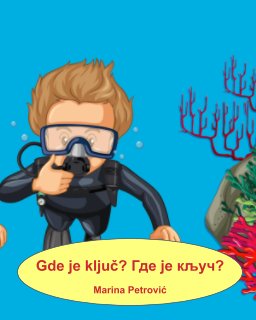
Gde je ključ? Где је кључ? - Učimo srpski sa Marinom
Gde je ključ? ...
Where is the Key?-...
By Marina Petrović
Photo book