Learn Serbian

Learning Serbian with exercises, video lessons and online courses

Google Tag Head

Tuesday, June 13, 2017

Serbian Adjective HAPPY - Part 5

Serbian Adjective HAPPY

In the previous lessons about the adjectives in Nominative, we learnt the forms of the adjective HAPPY just for Sg. Masc and Feminine. Here comes the list with all the forms:

Masc. Sg. SREĆAN
Fem. Sg. SREĆNA
Neut. Sg. SREĆNO

Masc. Pl. SREĆNI
Fem. Pl. SREĆNE
Neut. Pl. SREĆNA

Let's expand our short sentences into longer ones, by combining it with the reason - why someone is happy:


Conjugation of the Verb to Go to

In order to figure out how to make the previous sentences, take a look at the conjugations of the verb TO GO = ići:


The full video with the slow pronunciation and explanation and exercises will be posted for my Patreons. Many thanks for supporting these short n fun video lessons - Hvala!

Monday, June 12, 2017

Where is Marko Now - Serbian Locative 3

In our fun Serbian comics we can learn where people are, or where they were in the past. Today we are using the same case, the Locative case to express where we are in a house and after that we can also say what we are doing in the house.


Instead of a comic, I recorded a video for you, so you can practice saying simple sentences:


  • Ovo je HODNIK. Ovo je Marko. Marko je u hodnikU. On ne radi ništa u hodniku.
  • Ovo je KUHINJA. Ovo je Marko. Marko je u kuhinjI. On pravi doručak u kuhinji.
Can you listen to the rest of the story and make similar sentences for:

  1. KUPATILO
  2. TRPEZARIJA
  3. SPAVAĆA SOBA
  4. RADNA SOBA
  5. TERASA
  6. TAVAN
  7. DNEVNA SOBA

Singular Nouns in Locative in Serbian

Before thinking about the grammar, try to hear how I am using these words with the prepositon U or NA. If you are not sure, here comes a bit of advice:

Sg. Masc >>> add -U (u hodniku, u Londonu, u muzeju)
Sg. Fem >>> add - I (u kuhinji, u Moskvi, u galeriji)

Exercises and Practice


For more exercises with the activities and the locative case, check out my Patreon blog!

Friday, June 09, 2017

Common Phrases in Serbian - Destinacija broj jedan

Today we are learning two simple phrases in Serbian:


For the pronunciation and additional exercises, check out my Patreon blog :)

Thursday, June 08, 2017

Listening Comprehension - Advanced Serbian, Numbers

Let's listen to this short piece of news and jot down the numbers you hear!


Many thanks to Kratke vesti portal for sharing the news on a regular basis!

Wednesday, June 07, 2017

Advanced Serbian - Sports Events on 5th June 2017

Let's work on our sports vocabulary today :)


Tuesday, June 06, 2017

Plural Nouns in Serbian - Delfin

The Plural form in Serbian can be tricky. That's why I'd like to start with really easy Singular - Plural pairs for you to enjoy learning it :D

Delfin - Delfini 


More examples:

Animals
  • pingvin - pingvini (penguins)
  • konj - konji (horses)
  • jelen - jeleni (deer)
Buildings
  • muzej - muzeji (museums)
  • neboder - neboderi (skyscrapers)
  • stadion - stadioni (stadiums)

Advanced Serbian exercises - Sixth June

I have always enjoyed doing short tasks based on authentic news and fun texts. That is why I want to create and share with you the same kind of exercises based on daily news, both in the Latin alphabet and Cyrillic script. Today I'm sharing with you one of the common news section called "Dogodilo se na današnji dan" - "On this day in history" from KratkeVesti :)

 Cyrillic version Latin alphabet version

Friday, June 02, 2017

Photo Serbian - From To Genitive 4

Odakle je ova lasta?
Where is this sparrow from?

Odakle leti ova lasta?
Where does this sparrow fly from?

Ona leti od Beograda do Londona.
It (she) flies / is flying from Belgrade to London. 

Ma neee, ona leti od Afrike do Evrope.
Nooo, it flies/ is flying  from AFrica to Europe.

Ova deca nemaju pojma!!!
These kids have no clue!!!

Ona leti od kuće do reke.
It flies/ is flying  from the house to the river.

It's really complicated. Does anyone know the answer? 


I think there is no correct answer, but we can enjoy learning Serbian by playing with this sentence using the Genitive case.

Genitive in Serbian


With the prepositions "from - to", you'll use the Genitive case. In the singular it changes as we have described before:

Singular
  • London - od LondonA Masc. Sg. adds an -A
  • Moskva - od MoskvE  Fem. Sg. changes an -a into -E
  • Selo - od selA Neut. Sg. changes an -o into -A

Practicing Genitive in Serbian

Your task is to think about these places and give your own answer about the sparrow using the same form: 

Lasta leti od  ... do ...

  1. Lisabon - Budimpešta
  2. Madrid - Atina
  3. Kopenhagen - Ankara
  4. Zagreb - Ljubljana
  5. Boston - Peking
  6. Moskva - Oslo
  7. Lima - Kairo
  8. Čikago - Berlin
  9. Subotica - Niš
  10. Temišvar - Bratislava
Photo Serbian with Gavrilo

If you are wondering who took this wonderful photo of a sparrow, OR "Od koga je ova slika?", let me tell you that the author is Gavrilo! 

He has been my dear friend since forever and he has allowed me to use his beautiful photos in my photo lessons of Serbian. He is doing a great job promoting Serbia and its beauties and I invite all of you to thank him on his Pixoto page by liking and leaving comments under his photos :) Хвала Гојко! 


Thursday, June 01, 2017

Serbian Adjectives - Part 4

I am sure you are confident using the simple word "lep" thanks to the previous posts about adjectives in Serbian! You learnt that "lep" (beautiful) will change as follows:

Singular
  • Masc. LEP grad = grad je lep (beautiful city - the city is beautiful)
  • Fem. LEPA zgrada = zgrada je lepa (beautiful building)
  • Neut. LEPO dete = dete je lepo (beautiful child)
Plural
  • Masc. LEPI mostovi = mostovi su lepi (beautiful bridges)
  • Fem. LEPE zgrade = zgrade su lepe (beautiful buildings)
  • Neut. LEPA deca = deca su lepa (beautiful kids)
That's why I'm sure you will be able to decide which forms of "lep" are missing in the gaps: 
  1.  _______ nebo (sky)
  2. _______noć (night)
  3. _______ dan (day)

Made with ToonyTool.com

Yes, the answers are as follows:
  1. lepo
  2. lepa
  3. lep
If you are still wondering why "noć" is "lepa", check out my video explanation and translation :D

Monday, May 29, 2017

Serbian Adjectives in Nominative - Part 3

The aim of the first two blog posts about the Serbian adjectives was to introduce you to the feminine/masculine change in adjectives in Singular:
  1. GLADAN / GLADNA
  2. SREĆAN / SREĆNA
Today, I'd like to introduce a new adjective "LEP" which means "beautiful". It is universally used for people (men, women, children), animals, plants, objects as well as abstract concepts.

This time you can see that the word in neuter singular is introduced and you can see how the adjective changes along with it. 
  • LEP MOST (a beautiful bridge)
  • LEPA ZGRADA ( a beautiful building)
  • LEPO DRVO (a beautiful tree)
Made with ToonyTool.com

You can practice answering the following questions as well:

  1. Kakav je Kip slobode? (What is the Statue of Liberty like?)
  2. Kakva je reka? (What is the river like?)
  3. Kakvo je nebo? (What is the sky like?)

In the background you can see some objects in plural and I invite you to think how the same adjective "lep" ends when describing:


  • zgradE (buildings)
  • balonI (baloons)
The answer with the pronunciation waits for you at my Patreon blog.

Friday, May 26, 2017

Fun Serbian - Pronouns

Before watching the video try to figure out which words are missing in this short exercise:
Tramp brutalno odgurnuo Markovića

Thursday, May 25, 2017

Serbian Genitive - Part 3

While in the previous simple Serbian cartoons we ppractised the prepositions followed by the Genitive:

  1. Iz = From
  2. Ispod / Iznad / Pored etc.
today we are revising the same case, with words, both in Masc. and Feminine Singular, such as: 
  • Rim, London, Pariz >>> iz RimA, iz LondonA, od ParizA - Sg. Masc.
  • Srbija, Engleska >>> iz SrbijE, iz EngleskE - Sg. Fem.
However, this time I am also introducing demonstrative adjectives this and these in Serbian:

This and These in Serbian

  • for "she" (like in "this girl" - devojčica) >>> Ova devojčica
  • for "he" (like in "this boy" - dečko) >>>Ovaj dečko
  • for "it" (like in "this sun" - sunce) >>> Ovo sunce
  • for they Masc. Pl or Masc. and Fem. Pl. together (like in "these people" - ljudi) >>>Ovi ljudi
  • for "they" Fem. Pl.(like in "these women" - žene) >>> Ove žene
  • for "they" Neut. Pl. (like in "these kids" - deca) >>> Ova deca

Made with ToonyTool.com

Serbian Genitive Task

I'm going to write the translations of these captions. Your task is to match them with colours :)

Boje (colours)  su: narandžasta (1), crvena (2), tamno plava (3), ljubičasta (4), tamno ljubičasta (5), zelena (6)

  • a) My village is more beautiful than Paris (the preposition "than" in comparison always requires the Genitive case)
  • b) This one with an umbrella is from London for sure (the preposition "from" requires the Genitive)
  • c) If they are from Rome, we are from Paris!
  • d) If this sun sees me, it must think I am from Paris!
  • e) This little one (=a girl) is surely from Serbia!
  • f) These postcards from Italy are funnier than the ones from France!

Tuesday, May 23, 2017

Giving directions in Serbian - Part 1

Made with ToonyTool.com

Giving Directions in Serbian


  • Izvinite = excuse me (although izvinite can mean sorry as well)
  • da li = the way to start "yes -no" question
  • ovo = this
  • put = way
  • za = to
  • aerodrom = airport (masc. sg.)
  • ali = but
  • na raskrsnici = at the crossroads
  • skrenite = turn (formal, informal is "skreni") 
  • desno = right 


Saturday, May 20, 2017

What are you having for breakfast?

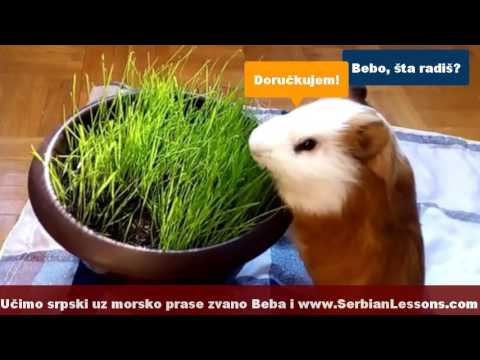
Let me introduce you to one of my pets, a guinea pig called Beba. If it is a boy or a girl, you'll find out in our future lessons with it :)

The idea is for you to practice this short dialogue asking each other what you are having for breakfast:


a: Šta radiš = What are you doing?
b: Doručkujem = I'm having breakfast.
a: Šta doručkuješ? = What are you having for breakfast?
b: Doručkujem (travu) = I'm having grass for breakfast. (trava = grass)

For this, you'll need some knowledge about food & the accusative case. I'm sure this video will help:


Have fun!


Friday, May 19, 2017

Serbian Adjectives 2

If you mastered the word hungry: gladAN - gladNA, you are ready to deal with happiness :D

Made with ToonyTool.com

He is happy = On je srećan.
She is happy = Ona je srećna.
They are happy = Oni su srećni.

Now, for a more difficult task! How would you say the following phrases:


  1. I am happy (said by a girl)
  2. I am happy (said by a boy)
  3. We are happy (for a boy and girl)

Thursday, May 18, 2017

Hteti - Will or Want?

One of the frequent questions is how to translate Serbian "hteti" into English?

Made with ToonyTool.com

Hteti - Will or Want?

The simple truth is that the verb "hteti" can be translated into English in both ways, either will or want to, or even wish. The best way is to learn through some examples.

Želeti vs. Hteti

  1. Hoćeš li mi  pomoći? Will you help me? (pure future ) - Hoću! Pomoći ću ti (Yes, I'll help you)
  2. Hoćeš li prestati već jednom? Will you stop it once and for all? - Neću! (I won't)
  3. Hoćeš li da mi pomogneš? Do you want to help me? (a bit stronger than "want") - Naravno! Of course! Svakako! Sure! 
  4. Da li hoćeš da idemo u Beograd? Do you want us to go to Belgrade?
  5. Želiš li da mi pomogneš? Do you wish/want to help me? (a bit more like "wish" than "want") - Kako da ne! Sure!
  6. Šta želiš da ti kupim u Beogradu? What do you want me to buy you in Belgrade?

Accepting and Declining 


The other set of useful phrases which we can learn from is how to best respond to questions starting with "Will you?" or "Do you want to....?"

Prihvatanje/potvrđivanje = Accepting
  • Naravno
  • Svakako
  • Nema problema
  • Kako da ne
  • Hoću (if the question starts with Hoćeš li...?)
  • Želim (if the question starts with Želiš li...?)
  • Da
  • Jašta (colloquial + archaic, but fun)
Odbijanje = Declining

  • Nema šanse (no way)
  • Nikako (no way)
  • Neću / Ne želim
  • Ne, hvala (no, thanks)
  • Jok (colloquial + archaic, but fun)


Wednesday, May 17, 2017

Adjectives and Genders in Serbian - 1

Many of my students have asked me to create a series of video lessons or similar teaching materials dedicated only to adjectives contrasting Masculine and Feminine forms. Here comes the first one in this series - something reeeeaaaaally simple:


Made with ToonyTool.com

Masculine Sg. of hungry>>> gladAn
Feminine Sg. of hungry >>> gladnA
Neuter Sg. of hungry >>> gladNo

Exercise with this photo lesson


  1. Ko je gladan? Who is hungry?
  2. On je gladan! He is hungry!
  3. Ona je gladna! She is hungry!
  4. Ja nisam gladan! I am not hungry!

Here comes a trick question: Da li sam JA dečko ili devojčica? Am I (JA in sentence 4) a boy or a girl?

Tuesday, May 16, 2017

Greetings from Genitive - Part 2

If you really had fun learning Genitive yesterday, I'm sure you'll have a blast  today:


Made with ToonyTool.com

As you can see, there's a bunch of characters speaking to you in Serbian (written both in the Cyrillic and Latin alphabet :) Because they are talking about where they are right now, they are using (guess what?) the Genitive case. Now, I have a few tasks for you. Let's find out:

A. Who is saying what? = Ko šta kaže?

  1. Sunce kaže: 
  2. Majmun kaže:
  3. Ptica kaže:
  4. Dečko kaže:

B. Where are = Gde su...

  1. dečko (a boy)
  2. devojčica (a girl)
  3. pingvin (a penguin)
  4. ptica (a bird)
  5. majmun (a monkey)
  6. sunce (the sun)
  7. mačka (a cat)

C. One Cyrillic text is missing - which one? Write it in the comment below:


Serbian Genitive with Sg. Feminine Nouns


I hope you have mastered your Genitive with Sg. Masc. nouns. That's why we are working on  the nouns which are Fem. Sg. today. Look at the examples:

  1. Ja sam iznad zgrade! Ko sam ja? Da li sam ja ptica?
  2. Danas sam ispred zgrade! Ko sam ja? Da li sam ja mačka?
  3. Oni su iznad mene! Ko su oni? Ko sam ja?
  4. On nije iznad mačke! Ja sam iznad mačke! Ko sam ja?
What happens with the following nouns?
  1. zgrada = building
  2. ptica = bird
  3. mačka = cat
  4. devojčica = girl
  5. voda = water
when they follow the prepositions: 
  • iznad = above or over
  • ispod = below or under
  • iz = from
  • pored = near or beside
By looking the examples, you can see that the final -a disappears, becoming an -e:

  1. Iznad zgradE = above the building
  2. Ispod pticE = under the bird
  3. Pored mačkE = beside the cat
  4. Iza devojčicE = behind the girl
  5. Iznad vodE = above the water

Asking simple questions with the verb TO BE in Serbian

I am sure you have noticed two types of questions in this exercise:
  1. Wh-? questions: Ko sam ja = Who am I and Ko su oni? Who are they?
  2. Yes-no questions: Da li sam ja pingvin? = Am I a penguin? 
With the verb to be=biti, it is obvious that there is
  1. a wh-? question word before an inversion (ja sam becomes KO sam ja)
  2. da li question phrase before an inversion (ja sam becomes DA LI sam ja)
Yes, it's that simple :)

Rešenje = Solution


Now that you understand EVERYTHING, it's time to solve the mystery...

Monday, May 15, 2017

Serbian Genitive - Greetings from London, Part 1

What a lovely morning for such an easy Serbian Genitive photo lesson:
  Made with ToonyTool.com
Dobro jutro iz sunčanog LondonA! Pogodite odakle šaljem pozdrave: ispod ili iznad mostA?

Добро јутро из сунчаног ЛондонА! Погодите одакле шаљем поздраве: испод или изнад мостА?

Good morning from sunny London! Guess where I am sending the greetings from: under or above the bridge?

Serbian Genitive with Masculine Singular

London and most (bridge) are two Masc. Sg. nouns in this case. What endings showed up when we used them after the prepositions:

  1. iz = from
  2. under / below = ispod
  3. above / over = iznad
Yes, the answer is -A. So, if you are from the following cities/countries you will always  say "I am from ..."

  • Ja sam  iz Londona / Beograda / Lisabona / Bostona / Čikaga (Čikago) / Sidneja / Frankfurta /Minhena / Beča / Pariza
  • Moja mama je iz Perua / Irana / Iraka / Luksemburga / Portugala /Izrael


Sunday, May 14, 2017

Where are you today? Part 2

What do you want to do TODAY?
Šta želite da radite DANAS?

Today I am in Paris. I want to see the Mona Lisa.
DANAS sam u Parizu.  Želim da vidim Mona Lizu.

Made with ToonyTool.com While in the previous lesson we noticed that the Locative Singular ending was only -i, it was like that simply because we were in places which are in Feminine Singular (U Moskvi, Aziji, Evropi, Budimpešti...)

However, today we are in having fun  in places which are Masculine Singular and that's why we add the suffix -u at the end of each place:


  1. Ja sam danas u Parizu. = Danas sam u Parizu.
  2. ...Beograd >>> Beogradu
  3. ...Lisabon >>> Lisabonu
  4. ... Sidnej >>> Sidneju
  5. ... Niš >>> Nišu
  6. ...muzej >>> muzeju
  7. ... centar >>> centru 

Thursday, May 11, 2017

Let's Play Guessing Game

Let's take a guess:

Is this my room?

Made with ToonyTool.com

To master this topic, check out the following video

Wednesday, May 10, 2017

Where are you today?

Where are you today?

Today we are in Moscow. Moscow is in Russia. Russia is in Europe and Asia. Where are you today? Let's say this in Serbian! Made with ToonyTool.com Latin Script Version

Danas smo u Moskvi :) Moskva je u Rusiji. Rusija je u Evropi i Aziji. Gde ste vi danas?

Cyrillic Script Version

Данас смо у Москви :) Москва је у Русији. Русија је у Европи и Азији. Где сте ви данас?


Let's practice the Locative in Serbian

Feminine Singular

  • Moskva >>>Moskvi
  • Rusija >>> Rusiji
  • Azija >>> Aziji
  • Evropa >>> Evropi
  • Lima >>> ???
  • Barselona >>> ???
  • Budimpešta >>> ???
  • zgrada (building) >>> ???

Tuesday, May 09, 2017

Photo Serbian - Simple Yes/No Questions

Made with ToonyTool.com Let's play with fun photos and comics! All you have to do is ask simple questions:


  1. Da li si u Serbiji? (Are you in Serbia?)
  2. Da li čekaš da pređeš ulicu? (Are you waiting to cross the street?)
  3. Da li je rasprodaja u prodavnici? (Is there a sale in the shop?)

Sunday, May 07, 2017

Family Members and Friends in Serbian


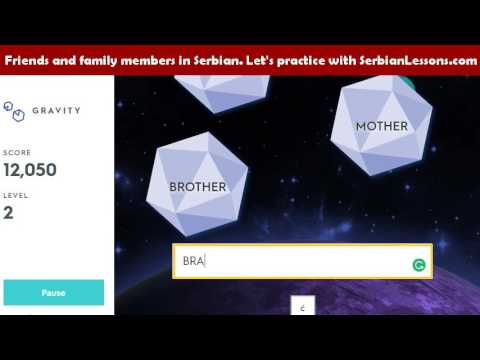
Another Quizlet video exercise for you to practice the pronunciation of the following words:
  • mama = mother
  • tata = father
  • sestra = sister
  • brat = brother
  • sin = son
  • ćerka = daughter
  • drug = close friend masc.
  • drugarica = close friend fem.
  • prijatelj = friend masc.
  • prijateljica = friend fem.
  • kolega =colleague masc.
  • koleginica = colleague fem.

Best Way to Learn 


Monday, April 24, 2017

Serbian Verb Conjugations - Practicing Can

Here comes a brand new video based on an exercise with the modal verb MOĆI. Let's watch the video first, before doing a bunch of exercises:


Practicing Can with Language Games


Practicing Serbian Verb Moći with Flashcards


Testing your Knowledge of Serbian Verb Conjugations 


Saturday, April 22, 2017

Perfective and Imperfective Aspect in Serbian

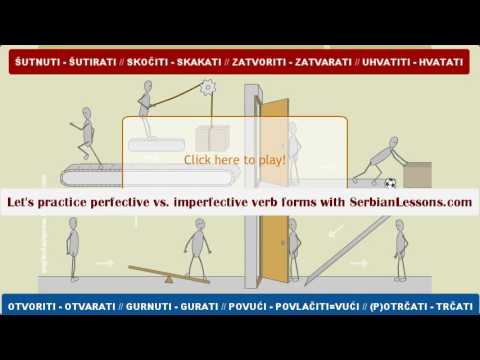
In today's lesson we will learn the following verbs

Perfective Aspect = Svršeni glagolski vid 


1. šutnuti = to kick
2. skočiti = to jump
3. potrčati / trčati = to run
4. povući = to pull
5. otvoriti = to open
6. gurnuti = to push
7. zatvoriti = to close
8. uhvatiti = to catch

Imperfective Aspect = Nesvršeni glagolski vid 


1. šutirati = to be kicking
2. skakati = to be jumping
3. trčati = to be running
4. povlačiti / vući = to be pulling
5. otvArati= to be opening
6. zatvAriti = to be closing
7. zatvArati= to be closing
8. hvatA = to be catching

We'll use them in the past tense.

Prošlo vreme, perfektni oblik = Past Simple Tense 


He kickED the ball - on je šutnuo loptu
he jumpED - on je skočio
he ran - on je potrčao
he pullED the box - on je povukao kutiju
he openED the door - on je otvorio vrata
he pushED the box - on je gurnuo kutiju
he closeD the door - on je zatvorio vrata
he caught the ball - on je uhvatio loptu

Click here for the full version.

As you can see each aspect has a different or slightly different form. That's why I am making the short videos with conjugations so you can hear and see the conjugations clearly. Let's focus on the fun task in front of us today, and in the following days you can expect me to focus more on the conjugations of the each verbs with fun exercises. Looking forward to getting your vocaroo.com stories in both aspects :)

Thursday, April 13, 2017

Get Ready for Easter

In the course of the past ten years, there's been a lot of posts about Orthodox Easter. I covered different topics, from the greetings to video stories about it, songs and songs . However, I still haven't written about one of the kids' most favourite tradition: egg tapping or "kucanje jajima".

Let me share with you what Wikipedia says about it:

Egg tapping, or also known as egg fightegg knockingegg pacqueingegg boxingegg picking[1] or egg jarping is a traditional Easter game. 

The rule of the game is simple. One holds a hard-boiled egg and taps the egg of another participant with one's own egg intending to break the other's, without breaking one's own. As with any other game, it has been a subject of cheating; eggs with cementalabaster, and even marble cores have been reported.[2]

To see what it looks like in one local community, I'm sharing a video about Easter egg fight from 2014, along with the listening comprehension quiz. For an easier quiz based video with basic greetings and common Easter phrases, check out my blog on Patreon.


Ћирилични задатак: одслушајте видео и допуните празна места. Резултат је у коментару :)
  1. Милица је добила ово јаје од ________ .
  2. Милица има ________ година.
  3. Милица је ________ у куцању ускршњим јајима.
  4. Ово је ________ такмичење у куцању јаја.
  5. Деца знају да код куће треба да направе ________ турнир.
  6. Данас је било ________деце.
  7. Све је протекло у ________ духу.


***********

Latinični zadatak: odslušajte video i dopunite prazna mesta. Rezultat je u komentaru :)
  1. Milica je dobila ovo jaje od ________ . 
  2. Milica ima ________ godina. 
  3. Milica je ________ u kucanju uskršnjim jajima.
  4. Ovo je ________ takmičenje u kucanju jaja.
  5. Deca znaju da kod kuće treba da naprave ________ turnir.
  6. Danas je bilo ________dece.
  7. Sve je proteklo u ________ duhu.

Monday, April 10, 2017

Serbian Conjugations - Verb to Have

Today I am sharing with you conjugations with the verb TO HAVE = IMATI + words in an office:


Present Simple of Verb to HAVE:


JA imam
TI imaš
ON-ONA-ONO ima
MI imamo
VI imate
ONI-ONE-ONA imaju

Nouns Following the Verb to Have


Feminine Sg:
1. stolica = chair
2. kanta = bin
3. biljka = plant
4. diploma = diploma
5. klima = air conditioning
6. slika = picture

Masculine Pl:
1. sto = table
2. kompjuter = computer
3. telefon = telephone
4. sertifikat = certificate
5. ormarić = filing cabinet
6. sat = clock

Speaking and Writing exercise


If you are curious as to why the final -a in the fem. sg. noun changes, do check the theory about the Accusative case. Even if you are not interested in the cases, after practising with this video lesson, you will be able to say and write these examples correctly.

If you would like to enjoy the full version with exercises such as this one with the verbs live and work, you are welcome to support my work on Patreon :)

p.s. You are enjoying these cute little animations, thanks to the consistent support of my five current Patrons!  Hvala im :)

Monday, March 20, 2017

Where do You Work?

In the verb conjugation series of videos, I just published a new video with a lot of examples how to use the verb TO WORK = raditi in the Present Tense.


Useful Vocabulary


In this lesson we are practicing the verb TO WORK in = raditi u ...

1. raditi = to work
2. škola = school
3. bolnica = hospital
4. prodavnica = shop
5. muzej = museum
6. pozorište = theatre
7. lekar = (medical) doctor
8. medicinska sestra = nurse

RADIM - RADIŠ - RADI // RADIMO - RADITE - RADE

To practice with a short story based on the verbs to go to, to live and to work, you're invited to follow Patreon blog! You can regularly access interactive surveys like this one:

... and get my feedback :)

Friday, March 17, 2017

Authentic Serbian - Greetings and Introductions

While conducting a survey about your needs in learning Serbian, some of you mentioned that they would appreciate videos with authentic Serbian, spoken in everyday situations by ordinary people.

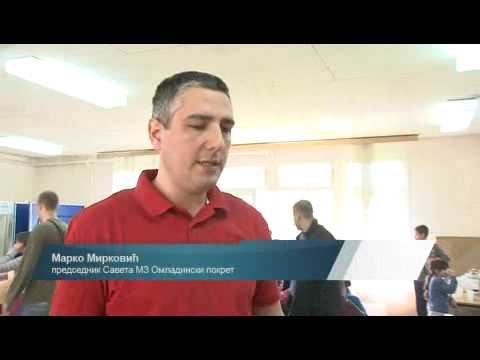
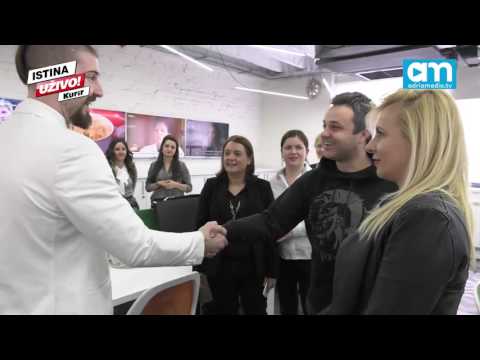
This video with a brand new  Serbian presidential candidate who is meeting the editorial team of a local newspaper is an excellent example of something like that. In it, Beli gets introduced with a lot of people, and you will be able to hear how ordinary people say "pleased to meet you".


I will list all the most common introductory phrases along with some others (not heard in the video), so your task will be simple. Just tick the phrases you hear while watching the video!
  1. Zdravo!
  2. Ćao!
  3. Dobar dan!
  4. Dobro veče!
  5. Ovo je ...
  6. Dobrodošao!
  7. Radujemo se tvojoj poseti
  8. Radujem se Vašoj poseti
  9. Drago mi je!
  10. To su naše lektorke.
  11. Bolje vas našao!
  12. Kako ste Vi?
  13. Kako si ti?
  14. Hvala.
  15. Kako ste?
  16. Mnogo vam je lepo ovde.
  17. Baš mi je drago.
  18. Jeste dobri?
  19. Jeste dobro?
  20. Poštovanje!
  21. Izvoli, dobrodošao!
  22. Izvolte, dobrodošli!
  23. Izvolite. 
  24. Hoćete neku kafu?
  25. Želite li kafu?
  26. Šta želite da popijete?
  27. Ne hvala.

Wednesday, March 15, 2017

Conjugations of Serbian Verb to Go to in Present Tense

Last time we practiced the verb to live. Today, we are learning the verb to go with the following video:


and a couple of exercises:


Wednesday, March 08, 2017

Serbian Verbs Conjugated - To Live

I have tried to make simple conjugation videos before, but was never satisfied with what they looked and sounded like. Last week, thanks to my dedicated patrons on Patreon and my students of Serbian whom I've been teaching for years, I was able to afford the first professional version of the software which I have always dreamt of.  HVALA!!!

How do you like my first pro conjugation video?


Now that I have all the tools, I am sure you'll all enjoy my short video lessons about:


  1. verb conjugations in Serbian, both in the Cyrillic and Latin alphabet.
  2. short video stories, based on the video with conjugations
  3. short dialogues based on the texts and Serbian Phrases
  4. videos explaining Serbian idioms
  5. easy Serbian songs and chants for kids
Još jednom ogromno hvala mojim dragim pratiocima i učenicima koji pomažu održavanje ovog bloga i sve bolji kvalitet video lekcija srpskog jezika. Moje nove lekcije će izgledati super zahvaljujući Mirku, Milici i Milenki, Lari, Matiji, Dejanu i Danijeli, Marion, Pavlu, Dejvidu, Niku i Dženi i Jani!!! 

Advanced Serbian - Srpski kao drugi jezik

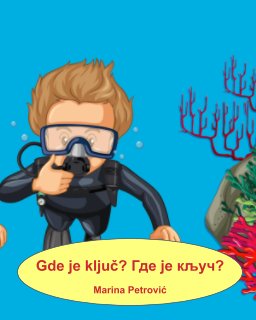
Gde je ključ? Где је кључ? - Učimo srpski sa Marinom
Gde je ključ? ...
Where is the Key?-...
By Marina Petrović
Photo book